Category: News

March Madness Wellness Walk 2026

March 16, 2026

March Madness Wellness Walk 2026

We had an amazing time at the Imperial County Wellness Walk! This year’s event was March Madness-themed, with employees shooting hoops while getting their steps in. A big thank you to Human Resources and Risk Management for organizing such a fun and active event!

Imperial County Highlights (February 2026)

A Message from the Chair

I’m sure many of you have heard the County talk about Lithium Valley over the last few years. Lithium Valley is unique because it represents an opportunity for Imperial County to shape its own future. The Lithium Valley Specific Plan and Program Environmental Impact Report are planning documents that have the potential to bring good-paying local jobs, strengthen our infrastructure, expand renewable energy development, and position our region as a leader in critical mineral production.

Just as important, it creates opportunities for workforce training and long-term economic investment right here at home, so our families and small businesses can benefit. 

We also know the idea of Lithium Valley, and the planning documents associated with it, are a big conversation. The LVSP and PEIR were released for review on December 30, 2025 with an initial 60 day public comment period. Over the past two months, we’ve received input from community members, tribal leaders, environmental advocates, state agencies, and industry partners, requesting more time to review the documents and provide input, which is why we’ve extended the public review period until April 17, 2026 at 5PM. We want all stakeholders to have more time to engage in the Lithium Valley initiative, review the plan and share their input.

We want to hear from you, and ensure the path ahead reflects the voices of the community. We encourage you to visit our County website to review the planning documents and submit your comments to PublicComment@co.imperial.ca.us 

February’s Paws & Reflect Moments

K-9 Rocko

K-9 Major

K-9 Dani

Some of the hardest-working members of the Imperial County Sheriff’s Office walk on four legs.

The Sheriff’s K-9 Unit pairs specially trained dogs with dedicated handlers who work side-by-side every day to help keep Imperial County safe. These canine partners have an incredible sense of smell and the training to detect illegal narcotics that would be nearly impossible for humans to find.

Whether assisting deputies during investigations, helping search vehicles, or supporting enforcement operations across the county, these dogs play a key role in getting dangerous drugs off the streets. Their work often happens quietly behind the scenes, but the impact they make for local communities is significant.

K-9 teams also support the county’s correctional facilities, where they help locate drugs and other prohibited items that could threaten the safety of staff and inmates. Their presence helps maintain a secure environment inside the jail system.


Say Hello to K-9 Kiki

The unit recently welcomed a new four-legged partner, K-9 Kiki.

Kiki works alongside Correctional Officer Handler Ramos, helping the Corrections Bureau detect illegal narcotics and other contraband within the facility. Even as the newest member of the team, Kiki already plays an important role in supporting the Sheriff’s Office mission of “Committed to Professional Service and Protection.”

Behind every successful K-9 team is a strong bond between handler and dog. Together they train, work, and rely on one another in situations where focus, discipline, and trust matter most.

And while they may look friendly and adorable off duty, when it’s time to work, these K-9s are highly skilled partners helping protect the people of Imperial County.

Found Their Furever Homes

The Positive Engagement Team (PET) is part of the MHSA Prevention and Early Intervention Program, using trained dogs to reduce stigma around mental illness and mental health services. PET helps individuals feel welcomed, supported, and motivated to seek treatment, while promoting dignity and equity for those living with mental illness.

How PET Works

  • Outpatient Clinics: Trained dogs engage clients, build trust, and create a positive, welcoming experience during appointments.

  • Community Outreach: PET participates in events like health and career fairs to combat stigma, educate the public, and promote positive perceptions of mental health services.

By connecting people with trained animals and professional mental health staff, PET helps destigmatize mental illness, encourage treatment, and foster a stronger, more supportive community.

February’s Sunshine Moments

Heber Townsite Improvements Phase II Groundbreaking

We celebrated the Heber Townsite Improvements Phase II Paving Project Groundbreaking in Heber!

This important project is a collaboration between the Imperial County Air Pollution Control District, the Imperial County Public Works Department, and the AB 617 El Centro-Calexico-Heber Community Steering Committee.

With $2.4 million in funding, the project will pave approximately 56,440 square feet of unpaved roadway shoulders north of SR-86 between Heber Avenue and Heffernan Avenue. By reducing fugitive dust from unpaved shoulders, this project will improve air quality while adding new sidewalks to enhance pedestrian safety for the Heber community.

Thank you to everyone who joined us!

Connecting Our Community: Supporting Older Adults and Families

Over the past few months, the Imperial County Area Agency on Aging and the Long-Term Care Ombudsman Program joined forces with First 5 Imperial to connect with communities across the county. At six different events, we met parents, grandparents, teachers, and students, sharing information and resources to help families support the older adults in their lives.

During these gatherings, we handed out nearly 800 bilingual (English and Spanish) senior directories filled with resources for care coordination, in-home assistance, nutrition programs, caregiver support, and access to community services. We also educated attendees about elder abuse prevention, including how to recognize signs of abuse, neglect, or exploitation, and what steps to take if concerns arise.

These events were more than just information-sharing. They helped build understanding between generations, strengthen our community, and ensure everyone knows how to access support and advocacy services. For more information, call 1-442-265-7030 or visit www.aaa24.org

Imperial County Registrar of Voters Announces Candidate Status for the June 2, 2026 Statewide Primary Election

Imperial County, CA — The Imperial County Registrar of Voters has released the official list of candidates who have filed to appear on the ballot for the June 2, 2026 Statewide Primary Election. The list, available on the Registrar of Voters’ website, reflects only those candidates who filed within Imperial County.

Residents can review the full list of candidates, including local, state, and federal offices relevant to Imperial County voters, by visiting elections.imperialcounty.org/current-election-activities/. This resource provides voters with the most up-to-date information on who will appear on the primary ballot.

“Transparency and accessibility are critical as we prepare for the primary election,” said Linsey Dale, Imperial County Registrar of Voters. “We encourage all voters to review the candidates and make informed decisions ahead of Election Day.”

For more information about voter registration, candidate filings, or to view the full list of candidates filing in Imperial County, visit elections.imperialcounty.org or contact the Registrar of Voters office at (442) 265-1060.

Imperial County Extends Public Review Period for Lithium Valley Specific Plan and Program Environmental Impact Report

Imperial County, CA — February 27, 2026 — The County of Imperial announced today that it is extending the public review period for the Lithium Valley Specific Plan (LVSP) and accompanying Program Environmental Impact Report (PEIR) to provide stakeholders more time to review and submit comments.

The decision follows requests from a wide range of interested parties, including environmental justice organizations, tribal representatives, state agencies, industry stakeholders, and community groups. The County recognizes the depth of public interest in the initiative and the importance of ensuring meaningful participation in this milestone planning effort.

“Lithium Valley represents one of the most significant economic, environmental, and infrastructure initiatives in Imperial County’s history,” said Chairwoman Peggy Price. “We have been listening carefully to feedback from all organizations and individuals. Extending the review period reflects our commitment to ensuring everyone has a meaningful opportunity to participate in shaping the future of this initiative.”

The LVSP and PEIR together outline a comprehensive framework to guide future development in the region, including geothermal energy production, critical mineral recovery, manufacturing, infrastructure, workforce development, and community investment strategies. Because of the breadth of issues addressed, the County determined that extending the review period supports transparency, strengthens the planning process, and allows stakeholders to participate more fully.

The extended review period will now remain open until April 17, 2026, at 5PM, after which the County will compile and respond to all written comments on significant environmental issues, received in conformance with the Notice of Extended Comment Period/Notice of Availability. The County encourages residents, organizations, and agencies to continue reviewing the documents and providing input during this extended timeframe.

The following information is available for review on the County’s website or the County Planning and Development Department:

  • Copies of the Draft PEIR, Draft PEIR Appendices A-1 through L-2 (excluding Confidential Tribal Consultation Appendix K), documents incorporated by reference, requested Draft PEIR references, the revised December 2025 LVSP, LVSP Appendices A through C, the General Plan and Zoning Ordinance/Map Amendments, and the Construction Workforce Ordinance. The Draft PEIR Executive Summary Chapter and the LVSP Executive Summary have also been translated into Spanish and previously made available on the County’s website. Copies of the Draft PEIR are also available at Imperial County Free Library, Calipatria Branch, at 105 S Lake Ave, Calipatria, CA 92233.

To review the files online or for information on how submit comments (included in the Notice of Extended Comment Period/Notice of Availability), please visit https://imperialcounty.org/lvsppeir/

The County of Imperial Clarifies Timeline of Outreach to Senator Padilla

Imperial County, CA – The County of Imperial is aware of recent press releases issued by Senator Padilla’s Office regarding the proposed Imperial Data Center project. In the interest of transparency and ensuring the public has a complete and accurate understanding of the County’s engagement efforts, the County has submitted a formal letter to Senator Padilla outlining the timeline of communications and meetings to date. That letter is attached for public review.

California Workforce Development Board Convenes in Imperial County for Workforce Meetings and Industry Tours

Imperial County, CA — The California Workforce Development Board convened in the Imperial Valley for a full day of meetings, discussions, and site visits focused on workforce development, education alignment, and the region’s legacy and emerging industries.

The visit was led by Kaina Pereira, Executive Director of the California Workforce Development Board, alongside Michael Wiafe, Assistant Deputy Director, underscoring the State’s commitment to place-based workforce solutions tailored to regional needs.

Local leaders welcomed state and regional partners at the San Diego State University Imperial Valley Science & Engineering Laboratories in Brawley, a newly opened, state-of-the-art facility designed to expand STEM education and directly support workforce development connected to the region’s growing clean energy and Lithium Valley economy.

“Imperial County is showing how equity-focused, regionally based workforce strategies can open doors to good jobs while meeting the talent needs of growing industries,” said Kaina Pereira, Executive Director, California Workforce Development Board. “By aligning education and training with regional priorities – from agriculture to clean energy – we are strengthening collaboration among local partners to expand opportunity and grow the regional economy.” 

The day began with guided tours of the Science & Engineering Laboratories, officially opened in August 2025. The facility represents a significant public investment in place-based talent development, providing hands-on instructional and research space that supports aligned STEM pathways, applied learning, and regional economic growth.

Workforce conversations throughout the day were grounded in the realities of the Imperial Valley. A legacy industry spotlight highlighted agriculture and food systems, focusing on workforce needs across production, research, and ag-technology, as well as strategies to support innovation, irrigation efficiency, and workforce transitions into emerging ag-tech roles.

The visit also included a stop at the Imperial Valley Research Center, where participants learned about ongoing agricultural research, innovation, and applied science supporting crop production, sustainability, and workforce training in the region. State leaders expressed strong interest in the Center’s potential to further align research, education, and workforce development, particularly as agriculture continues to intersect with technology, climate resilience, and emerging career pathways.

A working lunch brought together leaders from Imperial County Workforce Development, Imperial Valley College, and San Diego State University Imperial Valley to discuss education and workforce alignment, regional capacity and funding challenges, and opportunities to strengthen coordinated career pathways responsive to current and emerging labor market needs.

“This convening underscores the importance of coordinated workforce solutions that reflect the unique strengths and needs of Imperial County. Through strong partnerships with our local colleges, universities, and employers, we are expanding access to training and careers that support economic growth and community resilience,” said Priscilla A. Lopez, Director of Workforce & Economic Development, Imperial County.

Additional local leaders participating in the discussions included Efrain Silva, Dean of Workforce & Economic Development, Imperial Valley College and Board Member, Imperial County Workforce Development Board; Dr. Gina Núñez-Mchiri, Dean, San Diego State University Imperial Valley; and John McMillan, AVP of Economic Development, San Diego State University.

The afternoon featured presentations and discussions focused on clean energy, geothermal development, and Lithium Valley. Presenters included Vince Signorotti, Vice President of Government Relations for EnergySource Minerals, Mark Gran, Community Relations Manager for CalEnergy, Imperial County Supervisor Ryan Kelley, and Imperial County Assistant CEO Bari Bean, who shared insights on project timelines, workforce demand, training capacity, and the importance of local hiring and wraparound support as large-scale energy and critical minerals projects advance.

Participants then joined Assistant CEO Bari Bean for a guided Lithium Valley driving tour, highlighting existing geothermal facilities, and the region’s geothermal mud pots, while providing updates on planning efforts, community engagement, and workforce opportunities tied to future development. The visit wrapped up with a stop at Westmorland Date Shake, allowing visitors to experience and support one of the areas local small businesses that features both honey and dates from the region.

Imperial County also extends its thanks to Dr. Gina Núñez-Mchiri, Dean of San Diego State University Imperial Valley, for welcoming participants into the campus and laboratory spaces, as well as to the Imperial County Workforce Development team for their coordination, leadership, and ongoing commitment to building a skilled local workforce.

###

County Board Announces Updated Meeting Calendar and Board Rules Effective February 3, 2026

The Imperial County Board of Supervisors is announcing updates to its 2026 meeting calendar and Board Rules, following approval at the January 13th Board meeting. These updates, effective February 3, 2026, are designed to enhance transparency, public participation, and operational efficiency.

Key Updates to Board Rules:

Roles of Board Chairperson – Public Participation: A new provision (Bullet No. 3) has been added to clarify public participation in meetings.

Procedural Rules – Order of Business: Beginning February 3, meetings will start at8:30 a.m. and return to Open Session at 10:00 a.m.

Right of Public to Address Board: A new Section C. has been added to provide additional guidance for members of the public wishing to address the Board

The updated 2026 Board of Supervisors Meeting Calendar and Board Rules are available on the County’s BoS website https://board.imperialcounty.org/. The County encourages all residents to review these updates and participate in upcoming meetings.

Imperial County Inspires Future Aviators at Third Annual Wally Hale Aviation Day

Imperial County, CA – The community gathered at the Imperial County Airport this past weekend for the third annual Wally Hale Aviation Day. The event, dedicated to the memory of local pilot and flight instructor Wally Hale, successfully introduced nearly 90 young residents to the world of aviation before concluding early due to a mechanical incident involving a participating aircraft.

The event is a collaborative effort between the Imperial County aviation community, the Experimental Aircraft Association (EAA) Young Eagles program, and local sponsors. It serves as a tribute to Wally Hale, who was widely known for his passion for sharing the joy of flying with children. His son, Ben Hale, shared that his father loved the event because “it gave him the opportunity to share his love of flying with the community, especially with kids.”

Peggy Price, Chairwoman of the Imperial County Board of Supervisors for District 3, described the event as “a beautiful experience and a great opportunity for so many children.” She noted that there were 80 pre-registered participants and 10 walk-ins, all of whom were able to experience flight thanks to local pilots and volunteers, including some from outside the area.

The event was cut short following an incident involving a single-engine airplane that experienced a landing gear issue when the front gear failed to deploy. Lt. Col. Mark Nicholson of the Civil Air Patrol explained that mechanical issues such as this are known to occur and that airport personnel and pilots are trained to respond appropriately.

Nicholson outlined the standard procedure, which includes flying overhead to confirm instrument readings and attempting to manually lower the landing gear in a designated practice area. He praised the coordinated response, stating that “the Imperial County Airport did a great job handling the situation,” adding that fire and rescue crews were prepared and ready. He emphasized that the incident demonstrated how well-equipped the airport is to manage emergencies.

Event organizers and county officials emphasized that the situation was handled professionally and safely. They extended their appreciation to law enforcement, first responders, and emergency services personnel for their quick and effective response.


Despite the early conclusion, the focus of the day remained on the positive impact made on local students. David Oshack, a 17-year-old high school senior and EAA Young Eagles volunteer, shared how meaningful the event has been for him. He explained that “events like this open up so many opportunities in the world of aviation.”

Oshack shared that through a previous Aviation Day event, he met a pilot who later connected him with a scholarship. He was recently awarded that scholarship, has begun flight training, and expects to earn his pilot’s license within the next few months. He credited the event, coordinated by Robbie Phillips, with helping open doors for young people interested in aviation.

The Civil Air Patrol Squadron 499 was also on site to provide aerospace education. Lt. Col. Nicholson noted that the program offers aviation, aerospace education, and leadership training for youths ages 12 to 21. The local squadron meets Thursdays at 6:30 p.m. at the Imperial County Airport terminal, with new sessions beginning January 22.

Imperial County Appoints Bruce Davis as Director of Human Resources & Risk Management

Imperial County, CA – Imperial County is pleased to announce the appointment of Bruce Davis, PhD, SPHR, as the County’s new Director of Human Resources & Risk Management. In this executive role, Dr. Davis will lead Imperial County’s comprehensive human resources, employee–employer relations, and risk management programs, ensuring compliance with state and federal regulations while supporting a stable, high-performing public workforce.

Dr. Davis brings extensive senior-level public sector leadership experience spanning counties, cities, special districts, and educational institutions throughout California and the Southwest. His career includes service as Director, Executive Director, Deputy Director, Interim Director, and Senior Human Resources Manager in complex governmental organizations, providing both long-term leadership and interim executive oversight during periods of transition.

Most recently, Dr. Davis served as a consultant with MV Cheng & Associates and a Senior Human Resources Advisor with Regional Government Services, where he provided interim and consulting leadership to public agencies, including assignments as:

  • Deputy Director of Human Resources for the County of San Luis Obispo
  • Director of Human Resources for the Cities of Arvin and Rosemead, San Bernardino, and Upland
  • Interim and consulting HR executive for multiple municipalities and special districts across California

Throughout his career, Dr. Davis has led and implemented classification and compensation studies, salary surveys, organizational design initiatives, labor negotiations, executive recruitment, succession planning and employee development, and HR system modernization efforts. He has extensive experience presenting technical findings and recommendations directly to boards of supervisors, city councils, commissions, and executive leadership teams, with a focus on transparency, fiscal responsibility, and legal compliance.

Dr. Davis previously served as Executive Director of Human Resources for the City of Scottsdale, overseeing a department of 24 staff and a $15 million budget, and as Director of Human Resources for the City of Santa Cruz, where he managed labor relations with multiple bargaining units, implemented classification and compensation reforms, and strengthened recruitment, training, and workforce development programs. He has also held senior leadership roles with Los Angeles County, supporting countywide recruitment, testing, labor relations, employee appeals, and workforce planning initiatives.


In addition to his government leadership experience, Dr. Davis has served as a university faculty member and adjunct professor, teaching undergraduate, master’s, and doctoral-level courses in strategic human resources management, employment practices, industrial-organizational psychology, and organizational leadership. His

academic work complements his applied public-sector experience, bringing evidence-based, legally sound practices to public administration.

Dr. Davis holds a Doctorate in Psychology, a master’s degree in industrial-Organizational Psychology, and is a certified Senior Professional in Human Resources (SPHR) and Society of Human Resources Senior Certified Professional.

As Director of Human Resources & Risk Management, Dr. Davis will oversee recruitment and selection, classification and compensation, employee and labor relations, risk management, benefits administration, compliance, organizational development, and workforce planning for Imperial County.

“We are thrilled to welcome Dr. Bruce Davis to Imperial County,” said Dr. Kathleen Lang, County Executive Officer. “His extensive experience leading human resources in public sector organizations, combined with his expertise in classification, compensation, and organizational development, will strengthen our workforce and help the County achieve its strategic goals.”

Dr. Davis added, “I am humbled to be selected by the County for this critical position. I look forward to providing strategic leadership and a systems perspective to the human resources team and the County Departments.”

###

Imperial County Announces Public Comment Period for Lithium Valley Specific Plan and Environmental Review

Imperial County Announces Public Comment Period for Lithium Valley Specific Plan and Environmental Review #3

December 30, 2025

Imperial County, CA — December 30, 2025 — Imperial County today announced the release of the Draft Lithium Valley Specific Plan (LVSP) the Draft Program Environmental Impact Report (PEIR), General Plan and Zoning Ordinance/Map Amendments, and Lithium Valley Construction Workforce Ordinance, marking a major milestone in the County’s long-term effort to responsibly plan for Lithium Valley and position Imperial County as a national leader in developing a vertically integrated ecosystem that can produce baseload geothermal energy, a domestic supply of critical minerals, and co-locate advanced manufacturing.

The release of these draft documents initiates a formal public review and comment period and provides residents, tribes, agencies, businesses, and stakeholders an opportunity to review and comment on the proposed land use framework and comprehensive environmental analysis for the Lithium Valley planning area.

The Draft Lithium Valley Specific Plan and Draft Program Environmental Impact Report are available for public review from December 30, 2025 through March 2, 2026 at 5:00 p.m.

The documents are available online at https://lithiumvalley.imperialcounty.org

Additional information is provided at the end of this release regarding the comment and review period.

What Is Lithium Valley?

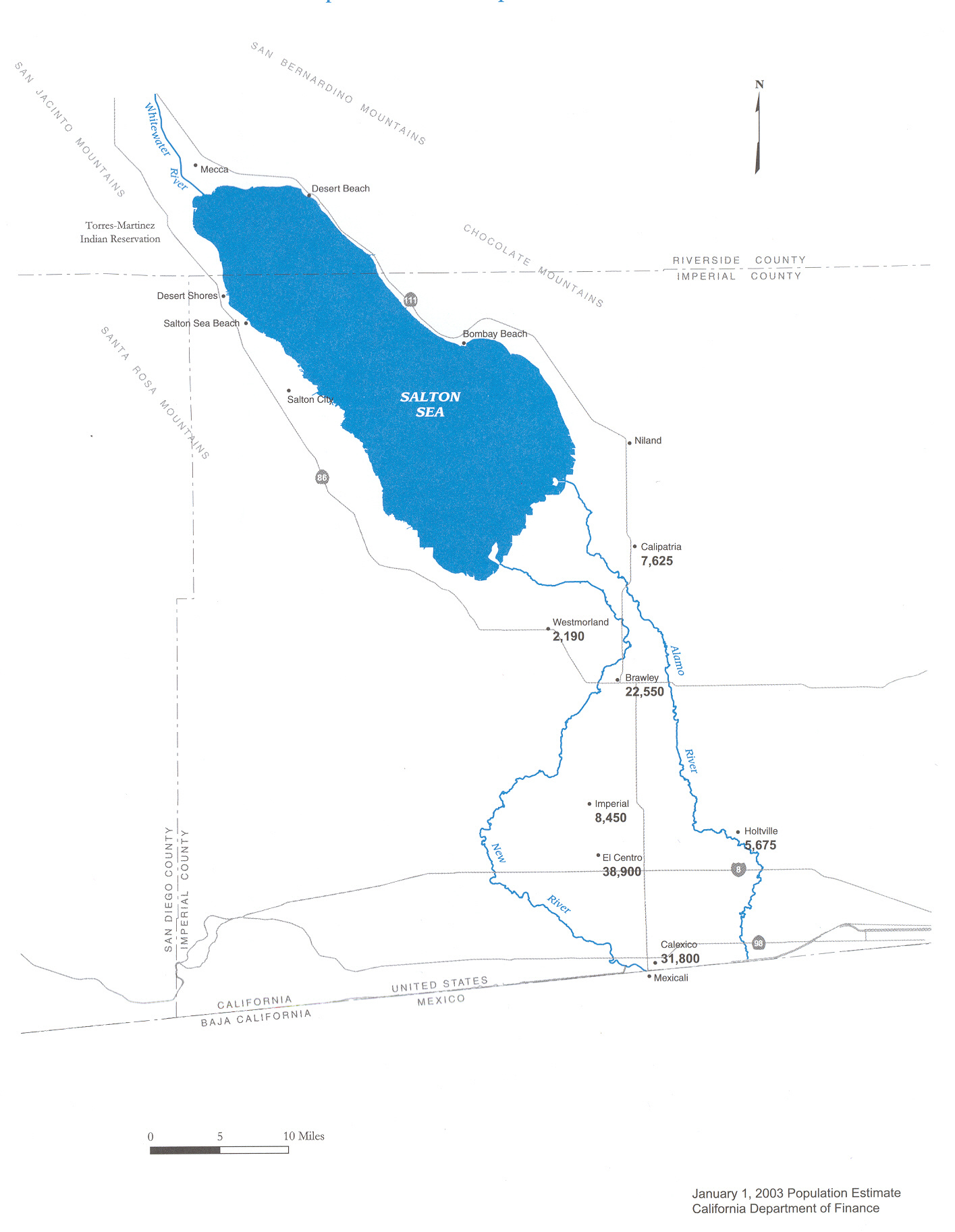
Lithium Valley is a 51,622-acre planning area located in the Northern area of Imperial County, along the southeastern shore of the Salton Sea in unincorporated Imperial County. The region has been a center of geothermal energy production for more than 40 years, with geothermal facilities operating throughout the area providing baseload renewable energy to California’s grid.

Geothermal energy in Imperial County is produced from naturally occurring heat deep within the earth, not from the Salton Sea itself. One of the largest geothermal reservoirs in the region is known as the Salton Sea Known Geothermal Resource Area (SSKGRA). Despite the similarity in name, there is no physical or hydrologic connection between the Salton Sea and the geothermal reservoir. The geothermal resource exists deep underground and is accessed through wells that circulate geothermal brine in a highly controlled system.

In 2023, a U.S. Department of Energy study confirmed that the geothermal brine within the SSKGRA contains up to 18 million metric tons of lithium, representing one of the largest known domestic lithium resources in the world. This creates a unique opportunity for the geothermal industry to recover lithium as a byproduct of existing geothermal operations, using a closed-loop, sustainable processes that does not involve open-pit mining, evaporation ponds, or the type of surface disturbance associated with traditional mining operations.

After geothermal energy is produced and lithium is recovered, the geothermal brine is reinjected back into the same underground geothermal reservoir, typically more than one mile below the surface. This reinjection process maintains reservoir pressure, supports long-term geothermal operations, and ensures the system remains fully contained underground. This approach has been used in Imperial County for decades and is subject to extensive state and federal regulation to ensure operational and environmental compliance.

The Lithium Valley vision builds on this long-standing geothermal history and focuses on enabling renewable energy, lithium and mineral recovery, advanced manufacturing, logistics, and supporting infrastructure, while balancing our region’s historical importance for agriculture, conservation, cultural resources, and environmental protection. The goal is to diversify the local economy, create high-quality jobs for residents, and deliver long-term community benefits while minimizing impacts to public health and the environment.

Purpose of the Draft Lithium Valley Specific Plan and Draft Program Environmental Impact Report

The Draft Lithium Valley Specific Plan establishes a long-term land use and zoning framework for the Lithium Valley planning area. It identifies where different types of uses may occur, including green industrial uses such as geothermal energy and lithium extraction, manufacturing, logistics, renewable energy, community opportunity areas, conservation lands, floodplains, and agricultural overlays. The Specific Plan is intended to provide clarity and predictability for future development while providing clear guidelines for protecting environmental, cultural, and community resources.

The accompanying Draft Program Environmental Impact Report (PEIR) is a comprehensive, program-level environmental analysis prepared in accordance with the California Environmental Quality Act (CEQA). Unlike a project-specific Environmental Impact Report that evaluates a single development proposal, a PEIR evaluates potential environmental impacts across the entire 51,622-acre Lithium Valley planning area and analyzes the cumulative effects of future development that could occur under the Specific Plan.

The Draft PEIR includes robust technical analysis of a wide range of environmental topics, including transportation and traffic, water supply and infrastructure, air quality and greenhouse gas emissions, biological resources, cultural and tribal cultural resources, noise, land use, utilities, infrastructure systems, hazards, and public health considerations.

The PEIR identifies potential environmental impacts, evaluates alternatives, and establishes mitigation measures. By completing this comprehensive, upfront environmental review, the County is creating a transparent planning framework that allows future development proposals to be reviewed more efficiently by utilizing the already completed CEQA analysis, for approved uses.

How the County Reached This Milestone

Imperial County has been developing the land use framework and environmental analysis for Lithium Valley for more than three years. This effort formally accelerated in 2022 following the passage of Senate Bill 125, which provided funding to prepare a Lithium Valley Specific Plan and conduct a program-level environmental review.

Since that time, the County has completed extensive technical studies, infrastructure analysis, environmental review, agency coordination, and public outreach. An initial draft of the Specific Plan was released in February 2025 and included a public review period. The County then subsequently refined the LVSP based on technical input and stakeholder feedback. The release of the revised Draft LVSP and Draft PEIR reflects years of deliberate, coordinated planning to ensure development is approached thoughtfully, transparently, and responsibly.

Extensive Community and Tribal Engagement

Community engagement has been a foundational element of the Lithium Valley planning process from the outset. Over the past several years, Imperial County has implemented one of the most extensive and sustained community engagement efforts ever undertaken for a County-led planning initiative.

Engagement activities have occurred across more than 41 different cities and communities, including all local communities as well as additional advocacy across the United States and Internationally. There have been more than 170 stakeholder meetings, 59 community meetings and workshops, and over 600 total engagement interactions. These efforts reached a broad cross-section of the community, including Imperial Valley residents, industry stakeholders, advisory groups, agency partners, and government and tribal leaders.

Senate Bill 125 allocated $800,000 for community engagement on the LVSP and PEIR by community-based organizations, to ensure that community voices were meaningfully incorporated into the planning process. Following a 2023 County Request for Proposals, $531,618.93 was awarded to local organizations to support education, outreach, facilitation, and community workshops related to Lithium Valley planning. Awardees and funding amounts included:

  • Comité Cívico del Valle: $207,289.22
  • IV Equity and Justice: $148,246.04
  • Los Amigos de la Comunidad: $78,083.67
  • Raíces: $72,000.00
  • Imperial Valley LGBT Resource Center: $26,000.00

In addition, $80,000 was allocated specifically for engagement with tribes that have areas of significance within the Lithium Valley planning area, supporting government-to-government consultation and culturally informed outreach.

To continue robust community engagement during the Draft LVSP and Draft PEIR public review period, the County released a new community engagement Request for Proposals in November 2025. This RFP will distribute the remaining $188,381.07 in engagement funding to support additional outreach, education, and facilitation focused on the Draft documents and ensuring awareness for opportunities to participate in the public comment process. Awardees are expected to be announced in early January 2026, with engagement activities continuing throughout the public review and public hearing(s) period.

In addition to broad outreach, Imperial County convened multiple task forces and advisory groups, which collectively held 14 meetings, to gather detailed technical input and community perspectives that informed development of the Specific Plan and environmental analysis, including:

  • Environmental Justice Advisory Group
  • Land Use and Development Technical Advisory Group
  • Infrastructure Technical Advisory Group
  • Academic Task Force

Input from these groups helped refine land use designations, infrastructure planning assumptions, workforce pathways, conservation strategies, and mitigation measures included in the Draft LVSP and Draft PEIR.

Anticipated Jobs and Workforce Development Pathways

Lithium Valley is expected to support a wide range of job opportunities across construction, operations, manufacturing, logistics, engineering, environmental sciences, and support services. The County is prioritizing pathways for local workforce opportunities, has partnered closely with education, industry, unions, and workforce institutions.

Key workforce pathways include:

  • Imperial Valley College Lithium and Industrial Training (LIFT) program, which provides hands-on training in one year certificate program(s) aligned with geothermal, lithium, and industrial careers
  • San Diego State University STEM campus in Brawley, which will expand access to higher education in science, technology, engineering, and mathematics fields directly aligned with Lithium Valley industries.
  • Construction Workforce Ordinance that was developed in partnership with labor and includes prevailing wage provisions as well as a 40 percent local hiring goal

Public Review and Draft Document Comment Period

The Draft Lithium Valley Specific Plan and Draft Program Environmental Impact Report are available for public review from December 30, 2025 through March 2, 2026 at 5:00 p.m.

Written comments may be submitted by mail or email:

  • Mail:
  • Imperial County Planning & Development Services Department 801 Main Street El Centro, CA 92243

  • Email:
  • publiccomment@co.imperial.ca.us (Please include “LVSP 2025” in the subject line)

The documents are available online at https://lithiumvalley.imperialcounty.org, at the Imperial County Planning & Development Services Department, and at the Imperial County Free Library, Calipatria Branch.

Public hearings before the Imperial County Board of Supervisors will be scheduled at a later date.

To ensure fairness and consistency in the environmental review process, all comments must be provided in writing to one of the approved channels. Oral comments and submissions made outside of the methods listed above will not be accepted or responded to as part of the Final PEIR.